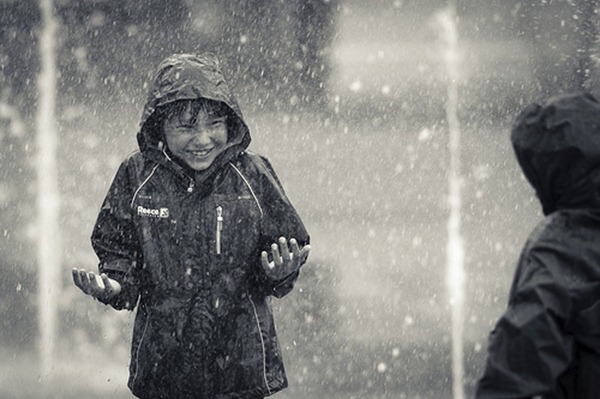
Tips for Camping in the Rain

Have you ever camped in the rain? And I don’t mean a sun shower. 
I mean rain, that doesn't ease up.
  
Good or bad experience?
medium_5848195448 
 
Generally, most people will say its far from ideal, and many just pack up and
head home early.  And if that is possible, then do it.  Because its not fun.     
Sometimes, ending a holiday is not possible, and you are going to have to 
just deal with it.

Important disclaimer before you read further:  I do like rain on 
the tent at night. It’s a great sound to hear when you are warm 
and dry.  So a little rain, is not going to kill you, and doesn't mean 
a ruined holiday. Stay calm and keep camping. 

So, here are some tips for camping in the rain (ie. not sun shower)
And add yours in the comment section too.

Don’t go

Now this might seem like a blooming obvious thing to say.


But if you do have an option to cancel, do it.  If your camping trip 
is just a weekend away, not planned with military precision, you 
might find that staying home could be better way to spend 
your weekend. 

Yes, it can be disheartening that planning and preparation is 
put on hold.  Yes, the kids might whinge and moan at the plans 
being thwarted.

But ask yourself this – would you much rather have the kids upset 
at home (and with lots of distractions and options available) or 
have them miserable and trapped in a tent/caravan with you 
for 2 days? 

There will always be another time.

Location Location Location 
Think about where you set up each and every camp trip.

So even if its sunny when you arrive, think about what its going 
to be like should it rain.  Where will the water run?  When it runs 
off your accommodation, will it run away from the tent, or pool in 
the indentation where you set up?

We camped in pouring rain, and as it ran off the annexe, it was 
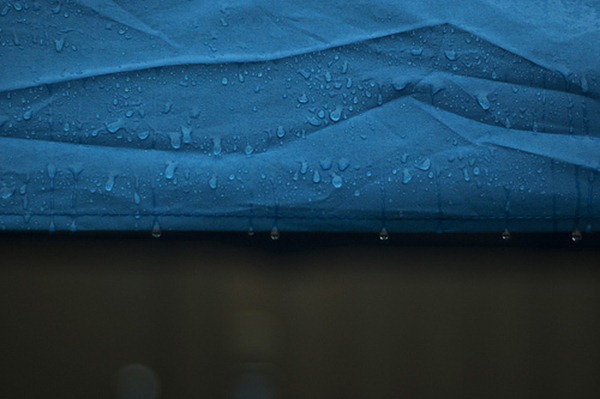
running straight to the tent entrance (in a dip).  Our son ran out 
in the rain, and dug trenches away from the tent (which he still 
talks about today!).

Extra shelter
medium_5694792483


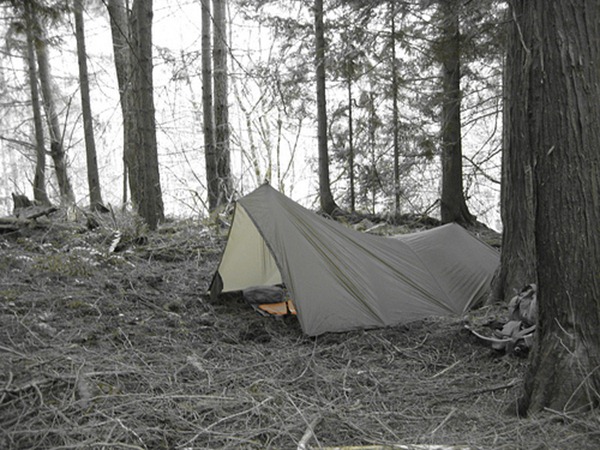
If space allows, bringing an extra shelter (apart from where you are 
sleeping) is VERY helpful.  You can use it as a space to wait out the 
rain and not be trapped indoors. It can provide protection for other 
camping gear, plus provide an area to cook and eat in (because 
you should avoid having food in your tent). And if there is a leak 
in your accommodation, you can always use this tarp/extra shelter, 
to provide much needed protection.

It does not need to be a massive pop up shelter either.  A tarp can 
do a great job.  The site Camping with Charlie has some good ideas 
on ways to set up. And important point, a shelter, provides an 
opportunity to set up a clothes line to dry off wet clothes.

If you have children – this might just save your sanity.
medium_3400140191


Appropriate Gear
medium_4826797160


Bring wet weather gear. That means waterproof jackets with hoods 
(or at least water-resistant). Umbrellas can work in the right situation, 
but not ideal especially if you are moving around the campsite and 
need hands to be free.Cotton clothing is really useless in rain.  

It gets wet and stays wet.   Whilst it can be great on a warm day, for rainy 
weather, its bad news.  See more on why cotton and rainy weather are 
not best friends, inthis article about why cotton kills.Dress appropriately, 
with layering is the best option.And if camping in the rain, seems to 
happen a bit to you, then do invest in the best wet weather gear you 
can afford. 

When it comes to camping and hiking gear, you do get what you pay for.
For children, sometimes a rain poncho works well. And good Wellington 
boots or any shoes that are are waterproof. Wet socks for little one
(and big ones, is miserable). Pack extra!    

Bags and more bags

Click to Close 


Keeping your “stuff” dry is paramount.

Don’t let wet gear into your sleeping area, because that is an area you 
need to remain pristine.   All wet gear stays outside, and store it a 
plastic bag to keep it touching anything else.  Dry sacks are 
great for keeping wet and dry, apart. Ensure all clean clothes 
(and dry) stay in a bag that won’t let water in. Use a garbage 
bag if really necessary.

All equipment especially cameras/phones should be in dry sacks when 
not in use. Water getting into them can be fatal to them. 
In your tent at night, keep them in waterproof bags too–if the 
accommodation lacks adequate ventilation, condensation can build up on them.

Lack of ventilation in your sleeping area, will mean condensation 
that makes everything damp.  Avoid letting bedding touch the 
walls of the tent.

Cooking

The meal on the campfire might have to wait due to rain.  Bring at 
least one backup meal that doesn’t require a roaring fire.  
Pasta and a bottled sauce is a good one to have in the supply box.

But just don’t try to cook inside your tent – ever.

 A good campfire stove is recommended for those times when a 
campfire is not an option.  We have a variety, but the Trangia is very 
multi-functional stove and is lightweight and portable too.  Just ensure 
if you are cooking under your tarp/shelter, that there is a large 
distance between the stove and the shelter.

And there are lots of articles on how to start a fire in the 
rain – but for me, it all sounds too hard when camping is meant 
to be fun.  If you are into Man Vs. Wild style of camping, then 
read up on how to do it.

Hopefully some of these tips will help make your next rain-filled camping 
adventure a little easier to cope with.

And if you do hang in there, and not head home because of the rain, don't 
let a bad experience colour your opinions on camping.   It's all these little, 
not-so-perfect moments, that can make your life one big adventure.
So, what do you think about camping in the rain?

Seasonally Protecting Your Patio Furniture


There are so many things to love about your patio furniture, including how it facilitates your entertainment needs. Having space for family and guests to enjoy the outdoors is a key way to keep everyone you love within arm’s reach.
Great patio furniture brings people together whether it is on your deck, porch or even gazebo, something says, “Come! Relax! Enjoy!” when patio furniture is involved. When furniture brings that type of appeal to your property, you certainly want to take care of it, and here are few tips to make that happen.
Store Your Cushions in a Dry Place
No, it is not always possible to beat the rain, and ensure your cushions are put away before the storm has time to take its toll on their comfort. However, when you are able to, place the cushions in a dry place – especially if you are going to be out of town for a few days.

Wipe the Down the Frames from Time to Time
Since your outdoor furniture is subjected to all kinds of conditions, including sun, rain and heat, take time to wipe down the frames with a soft cloth and mild cleaner, to keep build up from becoming an issue. You want people to enjoy their comfort, not stain their clothing.

Take Your Umbrella Down
When it comes to patio furniture that accommodates an umbrella, be sure to fold the device into its “down” position when it is not in use. With a large gust of wing, the umbrella can become a sail and rip through your yard – or worse, your neighbor’s yard – without warning. If you are on vacation, take the umbrella in during that time, to avoid any hazards that might be out of your control.

Move the Furniture Around
The sun and wind are bound to take a toll on your cushions and frames, so do them a favor by moving them around, so they all get equal coverage from the elements. This will also help keep your outdoor area looking fresh and new throughout the season!

Finally treat your patio furniture as you would your indoor furniture. Do not stand on the pieces, or spill something without cleaning it up right away. Also, do not forget to wipe your table down before each use. Sometimes we all forget what lurks outside, and sitting your dinner plate on the table before spritzing it with anti-bacterial cleaner may be asking for trouble. Enjoy!

Winter Hiking for Kids: Creating Memories in the Snow


It was as a young adult that Yemaya Maurer, coauthor of AMC Guide to Winter Hiking & Camping, became aware of the pleasures of traveling through a winter landscape and mourned a childhood that hadn’t included it. As she wrote in the guide’s introduction, she wished she had known as a child “what it was like to sit on snow-carved benches around a crackling fire or wake to fresh powder.” Her sense of having missed out on something important and wonderful propelled her to work as an outdoor educator, teaching winter hiking and camping skills to children and teenagers. “Every time I dig a snow cave or slide down steep slopes on the tails of my snowshoes,” she wrote, “I feel I’m reclaiming a slice of the childhood experiences I never had.”

Sliding forward in time, Maurer now has a 2-1/2-year-old daughter with husband and coauthor Lucas St. Clair. Together they want to make sure that Gabriella’s childhood includes adventures in all four seasons.
Maurer and St. Clair follow three simple guidelines for family winter activities: Keep it fun. Keep it safe. And keep it going.

Keep it Fun

Share your enthusiasm for being outdoors in the winter. “Kids draw on your energy,” Maurer says, so if you show enthusiasm each step of the way on a winter adventure—especially if it’s clear that you’re excited about sharing the adventure with them—chances are they’ll be enthusiastic too.
Play games. We think of winter as a time for indoor games, but winter also transforms landscapes, even well-known ones like our yards, into magical game spaces. On winter hikes, stop to make snowmen, snow angels, and snow forts. Or pretend you’re going on an “elk hunt” or a “moose safari”: The make-believe will make the miles go more quickly. Maurer also recommends watching for animal tracks in the snow, and the game “look for the alphabet,” in which children search for the shapes of letters along the trail.
Bring plenty of snacks. Pack hot cocoa in Thermoses, with or without marshmallows, for a special treat.
Choose child-friendly adventures. “Hiking along a river is usually a good bet,” Maurer says, as are hikes to frozen waterfalls. Children are drawn to water and often are intrigued by its solid state, ice. Maurer and St. Clair saw the appeal firsthand last winter during a stay at AMC’s Gorman Chairback Lodge. They skied the Long Pond Trail, pulling Gabriella, then 18 months old, behind them in a sled. At the frozen pond, Gabriella peered through the ice to the pond bottom below, walked on its slippery surface, and noticed how the frozen water made different designs and patterns. “The frozen pond made the hike memorable,” Maurer said. Hiking to waterfalls in the winter also avoids the crowds that often overwhelm those popular sites in summer months.

Keep it Safe

Snowshoes
Snowshoes on a mountain. Photo by Ryan Smith.
Have realistic expectations and be prepared to adjust them downward. In their AMC guide, Maurer and St. Clair suggest that parents plan winter hikes at half the distance a child can cover on summer hikes. For example, a 5-year-old child who can hike 3 miles in the summer will be able to travel only 1.5 miles on a winter hike. “It might be tempting to go farther than you originally planned if you see your child is doing well,” they write, “but avoid that temptation. We’ve seen many small children have major meltdowns within the last quarter mile from the trailhead. Set your children up for success by starting with very short trips and going slowly.”
Dress children in layers. If a child is in a carrier or a sled, dress the child one layer more warmly than you dress yourself. “You want as little exposed skin as possible,” Maurer says. Stop frequently to check that a child is warm and comfortable. With older children, teach them layering principles so that they can regulate their own temperature as they hike or ski. It’s always important to keep track of your own clothing and gear on the trail, but it’s a matter of safety in the winter.

Keep it Going

The media regularly dishes up depressing statistics on children’s inactivity and lack of playtime outside. According to a 2008 study conducted by the Children and Nature Network, only 6 percent of U.S. children ages 9 to 13 spend time outside in a typical week; other studies suggest that even the children who do go outdoors on a given day are spending only about 4 to 7 minutes in unstructured play.
Maurer and St. Clair have many reasons to want a different childhood for Gabriella. Their own experiences in the outdoors and as outdoor educators have taught them that kids are happier when they spend time outside. “If Gabriella learns to enjoy being outside in all kinds of weather, that’s a plus purely on health factors,” Maurer says. “It’s so much harder, especially in cold climates, to stay active indoors.” St. Clair adds, “Fresh air makes for happier kids.”
That’s equally true for Maurer and St. Clair as outdoor parents. “We’re happiest when we get time outside,” St. Clair says. Sometimes time outside is only 15 minutes at the park; sometimes Gabriella “comes along for the ride” on a hike or a ski. Even then, they try to make the experience a pleasant one for her. Last year at Gorman Chairback, they packed a little pair of cross-country skis along in the sled and slipped the skis on over Gabriella’s snow boots at rest stops. “She liked getting out and trying what Mom and Dad were doing”—and her enjoyment made their ski enjoyable as well. And it’s not merely that moment that matters: What we learn as children stays a part of us throughout our adult lives.
Gabriella’s memories of childhood will likely include many of the winter adventures that Yemaya Maurer once yearned for. She and St. Clair took Gabriella back to Long Pond last summer and reminded her that it was the same place they’d visited during the winter. “It was so interesting to watch her wrap her mind around the change from that frozen pond to the pond in front of her,” Maurer said. “I could practically see an appreciation for the wonder and variety of the natural world being created, right in front of me.”

Be Out There

NWF’s Be Out There movement is excited to partner with the Appalachian Mountain Club’s Kids Outdoors online community to help more kids and families explore the outdoors! By sharing ideas and resources through guest blogs, we’re working to bring more nature into children’s lives.
This article originally appeared on AMC’s Kids Outdoors in January 2014. 

Waterproof Your Ski and Snowboard Gear


Re-Waterproof Your Gear
When your gloves soak up water like a sponge, your jacket leaks like a sieve, or your boots feel like a swamp, it’s time to re-up the water repellency. Re-waterproofing gear is simple, cheaper, and more sustainable than buying new stuff, and it extends the longevity of whatever you’re waterproofing. Follow these easy steps and you’ll be shedding water in no time.

Wash
The first step in revitalizing your gear is to wash it. Ketchup, coffee, grease, ash-they all clog the pores of your gear’s fabric, and no, this is not some acne treatment pitch. When a fabric’s pores are clogged, moisture cannot exit and you get soaked with your own sweat. Wash your garments on a normal, cold-water cycle with a powder detergent.


Apply
There are a variety of different solutions depending on the type of garment you want to re-waterproof, too. For boots, try Dry Guy Waterproofing Footwear Waterproofing.
For shell jackets, pants, and gloves use Dry Guy Outdoor Fabric Waterproofing spray. You can even add a little waterproofing to seams, softshells, fleece, backpacks, sleeping bags, and more.
Dry
Allow to fully dry and your old gear should be revitalized and waterproof.


Now available on Amazon.com and at www.dryguywaterproofing.com.

Waterproof Breathable Fabrics

Overview

Waterproof breathable fabrics work to keep you and your layering system dry while allowing perspiration to exit during exertion. Waterproof breathables typically offered in 2-3 layer fabrics, all of which are all built upon the same principle: the pores of these fabrics are too small for water to get through, but large enough for body vapor to escape. To attain their waterproof breathable properties, fabric makers utilize either laminate technology or coatings.
Laminates are formed when waterproof breathable membranes are bonded directly to the underside garment’s face fabric. An analogy for this process is the idea of wallpaper applied to a wall. Where the membrane (wallpaper) + fabric (wall) = a laminate. Coatings are liquid solutions that provide waterproof breathable characteristics when applied to the face of the garment, similar to paint applied to a wall. All raingear face fabrics are treated with durable water repellent (DWR) finishes to provide extra water protection.

Waterproof breathables commonly consist of an outer layer known as a face fabric (usually made of nylon or polyester) and a laminated membrane or coating made of ePTFE or PU. A third layer consisting of a backer lining is sometimes added to provide abrasion resistance. The purpose of the face fabric is to add color and protection. Although this layer is treated with a durable water repellant (DWR), it is not waterproof. The second layer , the membrane, which has tiny holes too small to let liquid water enter, but large enough to allow water vapor to escape, is the waterproof layer. The last layer in 3 layer fabrics is bonded for comfort. Over the years most waterproof breathable fabrics are all extremely waterproof for any weather activities, but differ in breathability and other dimensions.

Laminates

The core of a laminate is its waterproof membrane. In laminates, the membrane is bonded to the fabric by applying pressure and heat. Membranes are most commonly made from expanded polytetrafluoroethylene or polyurethane films.
Expanded polytetrafluoroethylene (ePTFE)
ePTFE waterproof membranes have microscopic web-like structures that are only about 10 microns thick. Makers of Gore-Tex® have estimated that one square centimeter of ePTFE contains 1.4 billion pores. The pores in ePTFE are about 20,000 times smaller than raindrops making ePTFE hydrophobic (water repellent).
An ePTFE membrane is a low surface energy solid. That means the individual atoms of the membrane are tightly bound to one another. A low surface energy solid will only get wet when it comes into contact by a low surface energy liquid. Water has a high surface energy; atoms in water, while still bound, are not bounded to the same magnitude as low surface energy liquids. When a liquid has high surface energy, molecules tend to pull together in a shape that occupies the least amount of space on other surfaces. So when high surface energy water, makes contact with low surface energy ePTFE, water molecules bond tightly together into round droplets that slide off the surface instead of penetrating through.
There are only two ways that water can penetrate ePTFE- if water is applied with enough force or if the ePTFE membrane is contaminated. Rain during windy seasons exerts a force of about 2 pounds per square inch, which is not strong enough to penetrate ePTFE. Any high surface energy materials can cause contamination: dirt, body oils, sweat, or pesticides. When the membrane is contaminated, the composition of the membrane is altered, causing its surface energy to change. If water molecules come into contact with a high-energy surface, they split open and wet the surface of the material causing leakage. The only way to prevent ePTFE from contamination is to make it oleophobic (resistant to oils).
Gore-Tex®
It is hard to discuss waterproof breathable laminates without mentioning Gore-Tex®. Robert W. Gore discovered that ePTFE could be manipulated into a nearly weightless film, thinner than a trashcan liner. This membrane contained billions of microscopic pores that turned out to be so small, water droplets couldn’t fit through, but water vapor-that is released from the body when you sweat- could. Thus, the creation of waterproof breathables. Today, Gore-Tex® creates its fabrics by laminating their ePTFE membrane directly to a high performance face fabric. While Gore-Tex® was struggling with a membrane design that better allowed moisture to escape, eVent™ was created.
eVent
The eVent™ membrane is formed from ePTFE just like Gore-Tex, but without an added polyurethane film. eVent™ injects the ePTFE membrane with polyacrylate to make it more breathable, but according to fabric experts, less durable. eVent™ fabric maintains your body’s temperature and stays protected from contaminants. Since eVent™ infuses protective ingredients into the membrane, unlike Gore-Tex, that glues a separate layer onto the membrane, eVent™ fabrics have a unique waterproof membrane that allows millions of tiny pores to breathe while being too small for water to soak through. In cold, dry weather, a super breathable shell can actually lead to visible clouds of water vapor exiting the wearer’s body, which leads to heat loss. It is not uncommon for owners of eVent™ jackets, for instance, to need more insulation under their shells to stay warm.
Polyurethane Films (PU)
Polyurethane (PU) laminates are made by laminating a lightweight polyester fabric or 100% woven fabric to a thin film of polyurethane of about one to two millimeters thick. Once weaved together this creates a flexible and breathable water-resistant fabric. Using a thinner laminate helps keep the fabric as stretchy and soft as possible.
PU films allow for good stretch, complete waterproofing, and maximum comfort. As compared to ePTFE, PU films usually result in lighter, smaller-packing garments. PU laminates, unlike ePTFE laminates, can accommodate stretch in a garment’s design and are highly durable. Therefore, these lower cost PU films, may handle hard impacts such as falls better than ePTFE laminates.
PU laminates tend to have many characteristics that set them apart from other waterproof breathable laminates. Some of these general characteristics are long-term durability, flexibility. Additionally, PU laminates are abrasion and oil resistant. Tensile strength measures the stress a material can withhold before breaking while being stretched. The tensile strength of PU laminates can range from 5800 to 9506 psi (pounds per square inch) while the tensile strength of other laminates is around 4000. PU laminates can elongate 800% before breaking compared to the 300% of other laminates. PU laminates possess application flexibility, which means they can be transformed and altered while still retaining flexibility and performance. These laminates remain flexible in temperatures as low as -60°F, which makes them the perfect material for demanding environments.

Coatings

Coatings consist of spreading a layer of polyurethane resin directly onto the fabric. There are two mechanisms to make coated fabrics, microporous or monolithic.
Microporous
Microporous coatings have very small pores that are big enough to allow vapor to pass through, but smaller than a raindrop. This means that perspiration from your skin can easily pass through the fabric, yet raindrops are way too large to soak into the garment. The diameter of microporous coatings range from 0.1 to 1.0 micrometers, a raindrop’s diameter is larger than 3.0 micrometers, but the diameter of vapor is about 0.0004 micrometers.
 
Monolithic
Monolithic coating is a solid nonporous coating that protects from the wind and will not clog with dirt, detergent, perspiration or dirty water like a microporous coating might. This hydrophyllic coating pulls perspiration off skin, then absorbs the perspiration vapor and disperses it through the fabric, allowing it to be evaporated away from the fabric. 
 Fabrics with coatings and lamination have about the same level of durability, but coatings come off gradually while delamination (the separation of laminated layers of fabric), once begun, happens more rapidly.

Measurements

The terms waterproof, water resistance, wind resistance, and breathability refer to specific conditions that have been tested for in a laboratory. Products are usually given two ratings, the first is a measure of how waterproof a fabric is and the second of how breathable the fabric is. When comparing measurements it is important to make sure you are comparing measurements with the same scale. In order to be waterproof by definition, a fabric is only required to withstand over 1,000 mm of water pressure without leaking; therefore, it is important to learn the ratings.
Waterproof rating
Water resistance is measured by the pressure of water, in millimeters (mm), that can be kept out of the fabric for a 24-hour period of time. Once a fabric is rated at least 20,000 mm/24hr it is completely waterproof.
Waterproof Rating (mm)Resistance providedWhat it can withstand
0-5,000 mmNo resistance to some resistance to moistureLight rain, dry snow, no pressure
6,000-10,000 mmRainproof and waterproof under light pressureLight rain, average snow, light pressure
11,000-15,000 mmRainproof and waterproof except under high pressureModerate rain, average snow, light pressure
16,000-20,000 mmRainproof and waterproof under high pressureHeavy rain, wet snow, some pressure
20,000 mm+Rainproof and waterproof under very high pressureHeavy rain, wet snow, high pressure
Breathability
One of the problems with breathability measurements is that there is no universally accepted standard. Therefore, when comparing breathability measurements consumers may not be aware that they are not comparing equal measurements. One frequent measurement for breathability, however, is the grams of water that can move through a square meter of fabric over a 24 hr period (g/m²/24hr). Below are the ratings of waterproof products compared to others on the market.
Brand
Product
Waterproof Rating
(mm/24hr)
Breathability Rating
(g/m2/24hr)
Toray®
Dermizax®NX
20,000+
50,000+
Toray®
Dermizax®EV
20,000+
20,000
eVent
eVent
30,000
22,000
Gore-Tex®
PacLite®
28,000
15,000
Gore-Tex®
Performance Shell
28,000
17,000
Gore-Tex®
Pro-Shell 3-Layer
28,000
25,000
Marmot
MemBrain®
20,000
25,000
Marmot
PreCip®
15,000
12,000
Marmot
PreCip Plus®
25,000
15,000
Mountain Hardwear
Conduit
20,000
20,000

-By Jason Hairston
http://blog.kuiu.com/#sthash.mxH2bJeZ.dpbs
By: Jason Hairston